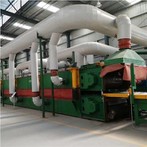
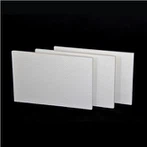
Existem dois tipos de fibras cerâmicas refratárias: módulos de fibra cerâmica e blocos dobrados. Além da diferença de densidade, os módulos possuem âncoras e tábuas de madeira, enquanto os blocos dobrados não. O módulo de fibra cerâmica é feito principalmente de manta de acupuntura de fibra cerâmica de material correspondente, que é processada em uma máquina especial de acordo com a estrutura e o tamanho do componente de fibra. Durante o processamento, é finalmente formado por prensagem de acordo com as especificações desejadas.
Os módulos de fibra cerâmica são divididos em 9 graus de acordo com a temperatura de operação, de 900 graus C a 1600 graus C, comum, padrão, alta-pureza, alta-alumínio, zircônio-alumínio , cromo-contendo, zircônio-contendo, etc., que podem atender às necessidades de vários fornos e equipamentos térmicos. Diferentes graus de peças diferentes têm diferentes formas de requisitos de isolamento térmico. Com o avanço do plano nacional de-economia de energia e redução de emissões, a reforma do forno túnel-queima de tijolos é iminente, e o módulo de fibra cerâmica tem sido bastante elogiado por seu excelente desempenho de isolamento térmico em o teto do forno{10}}túnel de queima de tijolos. Com as principais reformas na proteção ambiental, as fibras cerâmicas desempenharam um certo papel na proteção ambiental.
The main components of ceramic fibers are Al2O3 and SIO2. Among them, the Al2O3 content in the high-alumina ceramic fiber module is relatively high (respectively, the chemical composition of ordinary type, standard type, high-purity type, high-aluminum type, and zirconium-containing type), which is 52 percent 55 percent , which belongs to injection fiber. It is also different from the spinning fiber. The diameter of the blown fiber is smaller, generally 2.03.0 μm, and the length of the fiber is shorter, generally 100200 mm. Because the fiber is thinner, the thermal conductivity is better than that of the spinning fiber. It is easily broken and torn during the folding process. On the other hand, the high-alumina type has a relatively high content of Al2O3, so it should be avoided in the kiln with electric heat as the heat source, so as to avoid the loss of personnel and property caused by electrical conduction, and the consequences are immeasurable. In general, the standard type is more commonly used, but the type of ceramic fiber module should also be selected according to the temperature of the kiln.
www.suntherm-indústria.com